

Flexibility Vs. Laxity
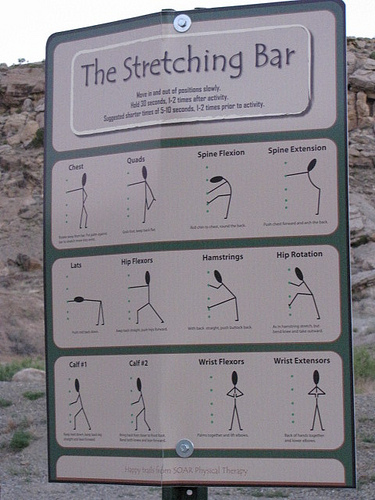 You constantly hear us talking about mobilizing joints such as your hips. One way to do this is to simply move (remember when we taught you about primal movement patterns?). Another way to do this is by stretching.
Stretching is great for everyone, however, what we need to remember is that everyone has different limits. This is due to our amount of congenital laxity, or basically, how much lax our ligaments have. This is the reason why some people have always had stiff joints (they’re just naturally stiff) and why some people have always had loose joints (again, just naturally loose).
Typically, having naturally loose joints occurs primarily in women, but that doesn’t mean it doesn’t happen in men too. The common belief that goes with having loose joints is that the muscles surrounding those joints are flexible as well. When in actuality, what needs to be understood is that whether it’s a woman or a man with lax joints, this doesn’t always mean that they are flexible.
Often, those with loose joints are actually quite stiff and cannot endure long range stretching.
It’s common to hear someone who is perceived as being flexible because they can squat low, drive their knees up high, or hip hinge really well to say their muscles are sore or tight. That tightness or soreness is actually their body creating trigger points as a way for to create stability in places where they are chronically weak and unstable.
These people tend to have poor balance and stability, hence they really should be working on their stability to improve their tightness rather than stretching to end ranges to help the body.
This brings me to the topic of end range stretching. End range stretching are stretches that push the limits of the body in stretching poses. Yoga is a great example of this. Although yoga has some fantastic benefits, it’s actually completely contraindicative to what a lax-joint person actually needs. Yoga can be negative as end-joint range is encouraged and the lax joint individual will only benefit from stability.
In order to achieve stability in end range stretching such as yoga, that individual should not be allowed to actually go to their end range; rather, just shy of that end range. Although the individual may be able to do it, it’s not necessarily improving the issue at heart. But of course, on the opposite spectrum, static stretching is not beneficial either as it will essentially be like a dog chasing its tail around and around. If the surrounding areas are weak, you can potential cause other problem areas or develop poor movement habits!
Image credit via Flickr.